
Over the past few weeks, I’ve read several thoughtful conversations on Substack about communication between residents and local government. They’ve approached the subject from different perspectives, but they seem to circle around the same question: what does effective communication between government and residents actually look like?
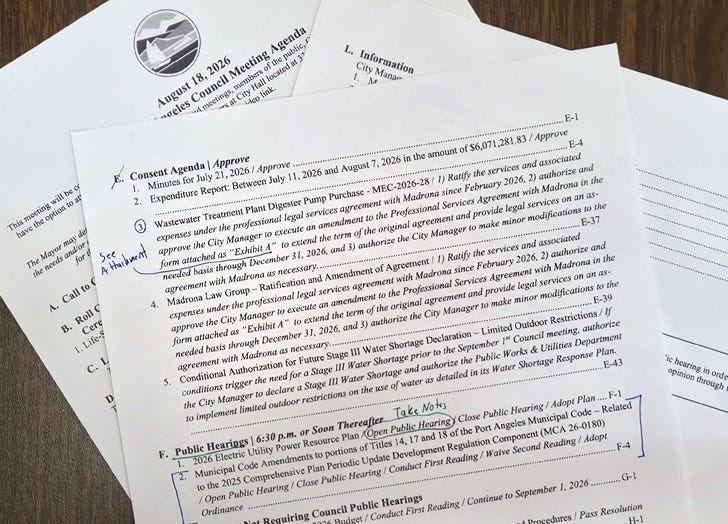
At first glance, the answer seems obvious. Government can publish meeting agendas, make documents available, livestream meetings, respond to emails, and explain decisions. These are necessary parts of an open and accountable government. I don’t think they’re the whole answer.
Government often measures communication by what it provides. Residents often measure communication by what they understand. Those aren’t always the same thing.
A resident can review the agenda packet and watch the meeting, yet still leave without understanding why the decision was made. They may not know what legal requirements applied or what authority the City Council actually had. Financial constraints may also have shaped the available options. They can see the outcome without seeing the reasoning that led there.
I wrote previously about the challenges of city budget transparency and how making information available doesn’t automatically make it understandable. The same principle applies well beyond budgets. Information is necessary, but information by itself doesn’t create understanding.
I don’t believe government is something that simply happens to people. I believe it’s something people can understand and participate in. Government is a system. Understanding its rules and processes helps people participate more effectively, and that works in both directions.
Residents bring experiences with City services that may not show up in a staff report. Sometimes they point out how a policy is affecting them in ways government didn’t anticipate. That information can change how I understand an issue.
Government also has a responsibility to explain itself. People should be able to understand where a decision was actually made and who had the authority to make it. For significant decisions, they should also be able to understand the reasoning behind it. Understanding doesn’t require agreement, and it isn’t a substitute for accountability. In many cases, understanding the process makes meaningful accountability possible.
Communication isn’t something that happens only after a decision has been made. Explaining a decision is part of governing, but that doesn’t mean every decision requires a lengthy explanation.
Many City Council votes are routine because the substantive decision happened earlier. Something may already be included in the adopted budget or implement a policy the Council previously approved. In those cases, turning every vote into another extended discussion would probably create more noise than understanding.
Communication should have a purpose. The goal isn’t simply to say more. The goal is to create better understanding.
Other decisions deserve more explanation. They may involve significant public interest or competing priorities. Sometimes there is simply a real choice among different outcomes. Those are the decisions where understanding why can be as important as knowing what happened.
Communication should have a purpose. The goal isn't simply to say more. The goal is to create better understanding.
Public participation is an important part of that process, but participation isn’t evenly distributed. Some people regularly attend meetings or communicate with Council Members. Others only reach out when an issue directly affects them. Many people never contact the City at all.
That doesn’t make the people who participate frequently less valuable. They often provide information and perspectives that aren’t found anywhere else in the decision-making process. However, the amount of visible participation around an issue doesn’t necessarily tell me how broadly a position is held throughout the community.
Volume isn’t the same thing as representation.
My responsibility as a Council Member isn’t simply to count emails and determine which side has more. Public input is part of how I evaluate a decision, but so are the responsibilities and limitations that come with the decision itself. Sometimes the law limits the available choices. Sometimes a proposed solution isn’t financially sustainable. Sometimes solving one problem creates a different one somewhere else.
Listening to the public doesn’t mean outsourcing the decision. It does mean taking what people tell me seriously and considering whether it changes my understanding of the issue.
This is also why being heard and getting the outcome someone wanted aren’t the same thing. Someone can make a strong argument and give me information I hadn’t considered. That can change how I understand an issue without ultimately changing my vote. When that happens, I think there’s a responsibility to explain why.
People shouldn’t have to guess whether their concerns were considered simply because the final decision went another direction. They should be able to evaluate the reasoning for themselves and question the assumptions behind it. They may also believe different information should have carried more weight.
That doesn’t guarantee agreement. It creates a more informed disagreement.
Results still matter. A thoughtful process doesn’t excuse a bad outcome, and explaining a decision doesn’t make the decision correct. However, the outcome by itself doesn’t tell the entire story either.
That doesn't guarantee agreement. It creates a more informed disagreement.
A decision should also be evaluated based on what was known when it was made and whether the process used to reach it was well thought out. New information emerges. Circumstances change. Sometimes that means a previous decision needs to be revisited. Changing an evaluation when one of the underlying variables changes isn’t a failure of the process. Refusing to reconsider because you’ve already taken a position can be.
My responsibility isn’t to make everyone agree with my conclusion. It’s to make the best decision I can based on the information and responsibilities I have at the time, while remaining willing to reconsider when that information changes. Part of that responsibility is explaining how I got there.
A vote is the most visible part of a Council decision, but it’s rarely the entire decision-making process. That’s part of what I mean by Beyond the Vote. The final vote matters, but so does understanding what led to it.
Understanding won’t eliminate frustration, nor should it. Local government will continue to make decisions that some people believe are wrong. Residents will continue to raise concerns that government needs to hear. Effective communication doesn’t require eliminating that disagreement.
It allows us to understand what we’re disagreeing about.
This article reflects my personal perspective as one member of the Port Angeles City Council and isn’t a statement on behalf of the City or the City Council.
Absolutely Drew, if people don't understand what they are reading or hearing how can an informed vote or decision be made.
Thank you for this! It’s a timeless life lesson: You don’t always get your way. Welcome to the group project that is civic engagement with government!