Serving Without Absorbing Anger
Reflections on personal security, accessibility, and serving a community where everyone is still your neighbor.

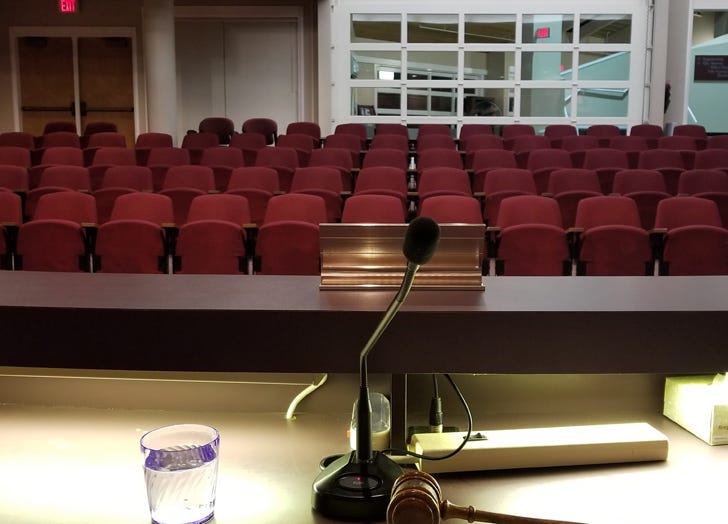
“I am here to serve, not to absorb anger.”
At the time, it sounded like a thoughtful reminder from a session at the Association of Washington Cities Annual Conference. Less than twenty four hours later, while I was still at the conference, someone I know personally shared that he had received a threatening message, because he was running for public office. I didn’t realize how quickly that session would become relevant.
Each year at the Association of Washington Cities Annual Conference, council members have to make choices. Several sessions are usually scheduled at the same time, and you can only attend one.
On Tuesday afternoon, I had three options. One was a short course on local planning. As a former Planning Commissioner, I’ve attended similar trainings several times before. Another focused on parliamentary procedure and navigating difficult council meetings. After years serving on boards, commissions, committees, and now City Council, along with previous training in Robert’s Rules of Order, I felt comfortable with that subject.
The third option was something completely new: Threat Ready: Personal Security Awareness for Elected Officials.
The description was vague. It promised practical training on personal security from a former White House security professional. I had no idea what to expect. It could have been a physically demanding self defense class. It could have been a lecture full of statistics and theory.
Curiosity won out, and I’m glad it did.
The session wasn’t about fighting or fear. It was about awareness. It focused on recognizing concerning behavior before it escalates, communicating effectively during difficult interactions, using de-escalation techniques, and continuing to serve the public without allowing hostility to define how you serve.
That opening quote resonated immediately. I’ve spent nearly twenty five years working in restaurants and retail. Anyone who has worked in customer service knows that people don’t always arrive at their best. Sometimes they’re frustrated. Sometimes they’re scared. Sometimes they’re angry about something completely unrelated to you. The better employers I worked for invested in de-escalation training. They taught us how to remain calm, listen carefully, and avoid making a difficult situation worse. I strive to provide my employees with that same training.
The session felt familiar.
The principles were similar.
The stakes were much higher.
The threatening message incident eventually became a news story. What stayed with me wasn’t the headline. It was the realization that training I assumed would be mostly academic had suddenly become practical. That doesn’t mean I suddenly became fearful. It means I realized that “I am here to serve, not to absorb anger” applies just as much in Port Angeles as it does anywhere else.
What surprised me wasn’t simply that the training was relevant. It was realizing why it was relevant here.
I want to be clear about something. I’m not looking for sympathy. I chose to serve.
Port Angeles has about 20,000 residents. Local government here works differently than it does in larger cities or at the federal level. You can email us. You can call us. You can attend meetings and give public comment. You can stop and talk with us downtown. You can run into us at Safeway. In my case, you’re probably more likely to recognize me from Anime Kat than from City Council.
That accessibility is one of local government’s greatest strengths.
Accessibility also makes disagreements much more personal. At the national level, elected officials can begin to feel like abstract figures. Most of us will never meet our members of Congress. Local government is different. When you disagree with a city council member, there’s a good chance you’ll eventually see them at the grocery store, downtown, at a community event, or in a local business.
Relationships in Port Angeles are connected by remarkably few degrees of separation. The person you’re frustrated with may know your family. You may know theirs. You may have mutual friends. You may find yourselves standing next to each other in line the following week. That closeness is one of our greatest strengths. It also makes difficult interactions much more personal for everyone involved.
I want to be clear about something. I’m not looking for sympathy. I chose to serve.
Public criticism comes with the job, and it should. Citizens should ask difficult questions. They should challenge our decisions. Residents have changed my thinking more than once. Some of those conversations have ultimately changed how the City approached an issue. That’s exactly how local government is supposed to work.
The session reminded me there is an important distinction between criticism and absorbing anger. Serving the public means listening, even when the conversation is uncomfortable. It means explaining decisions. It means acknowledging mistakes. It doesn’t mean accepting hostility as normal.
Everyone on City Council wants what’s best for Port Angeles. We don’t always agree on how to get there. Sometimes we don’t even agree on what the best outcome looks like. Those disagreements are healthy. Representative government works, because people bring different priorities and perspectives to the table.
Every council member is still a person. Every resident is still a person. Every difficult conversation is ultimately between neighbors.
The vast majority of interactions I have with residents are positive. People ask thoughtful questions. They challenge my assumptions. They point out information I hadn’t considered. Some of the most productive conversations I’ve had as a council member began with someone who disagreed with me. That’s exactly why preserving accessibility matters. I don’t want elected officials becoming harder to reach because of the actions of a very small minority.
One lesson from that session continues to stick with me: “I am here to serve, not to absorb anger.”
The more I think about that sentence, the less I believe it’s about personal security. I think it’s a philosophy of public service. It reminds elected officials to remain accessible without becoming hardened. It reminds citizens that disagreement is healthy while hostility isn’t. Most importantly, it reminds all of us that local government only works because people remain willing to have difficult conversations with one another.
The training I expected to be mostly academic became immediately relevant. The lesson I brought home wasn’t really about personal security. It was about protecting something even more important: our ability to keep local government accessible and connected. Those aren’t just qualities of good government. They’re qualities of a healthy community.
Additional context: This article was inspired by a local news story about a legislative candidate reporting a threatening message and my attendance at the Association of Washington Cities Annual Conference. If you’re interested in the original context, I’ve linked the candidate’s Facebook post, the news article, and the conference session materials below. The reflections above are my own.
Jugueta, Aiden. Facebook post. Facebook, accessed 24 June 2026, https://www.facebook.com/aiden.jugueta.586999/posts/pfbid02UYmki2kTJ18YWAzmyxpbrasUkRDgRmeruv2DppUwsBoMW8odoJ9fTbq6JfS1fSjCl.
Hanson, Emily. “Legislative Candidate Reports Death Threat.” Peninsula Daily News, 30 June 2026, https://www.peninsuladailynews.com/2026/06/30/legislative-candidate-reports-death-threat/.
Palmer, J. Chris. Threat Ready: Personal Security Awareness for Elected Officials. Association of Washington Cities Annual Conference, 23 June 2026, Yakima, WA. Presentation. Association of Washington Cities, https://wacities.org/docs/default-source/event-materials/annualconference/02threatreadypersonalsecurityppt.pdf
I agree with much of this. No elected official should have to endure threats or personal hostility. Civility matters, and respectful disagreement is essential if we want people to continue serving in public office.
That said, I also think it’s worth asking why frustration has become so elevated. Anger is often a symptom rather than the root cause. When residents feel there is a lack of accountability, limited transparency, or little measurable progress on the issues that matter most, trust inevitably erodes. In Port Angeles, we’ve experienced years of economic underperformance, declining living-wage employment, shrinking purchasing power, and forecasts that often don’t match reality. When government doesn’t regularly evaluate outcomes, acknowledge what didn’t work, and explain how it will improve, frustration builds.
Accountability isn’t just about admitting mistakes. It’s about measuring results, comparing promises with outcomes, and being willing to change course when the evidence suggests a different approach. That kind of transparency can do more to reduce public anger than any de-escalation training ever could.
Ultimately, I think we all want the same thing: a community where elected officials remain accessible, residents feel heard, and decisions are judged by measurable results. Respect and accountability are not competing values—they reinforce one another. The more transparent government is about its performance, the more trust it earns, and the healthier the conversation becomes.
What a terrible thing for Aiden to deal with.
I like the title of the article and the idea behind it. I agree with what Steven says in his comment, about understanding why people are angry. Sometimes it’s rational, sometimes it’s not — like in Aiden’s situation.
For myself, seeing what you write on Substack, and Jon Hamilton as well, is helpful. Even though I don’t live in PA, I go there, I spend money there, and I want it to be better. I don’t always agree with the decisions being made, and honestly what I want could never exist in this state and I know that, but reading your views and Jon’s views offers better transparency and understanding, and I appreciate that. I hope more local elected officials will work towards blogging to share their views and create connections with more people in their community.